

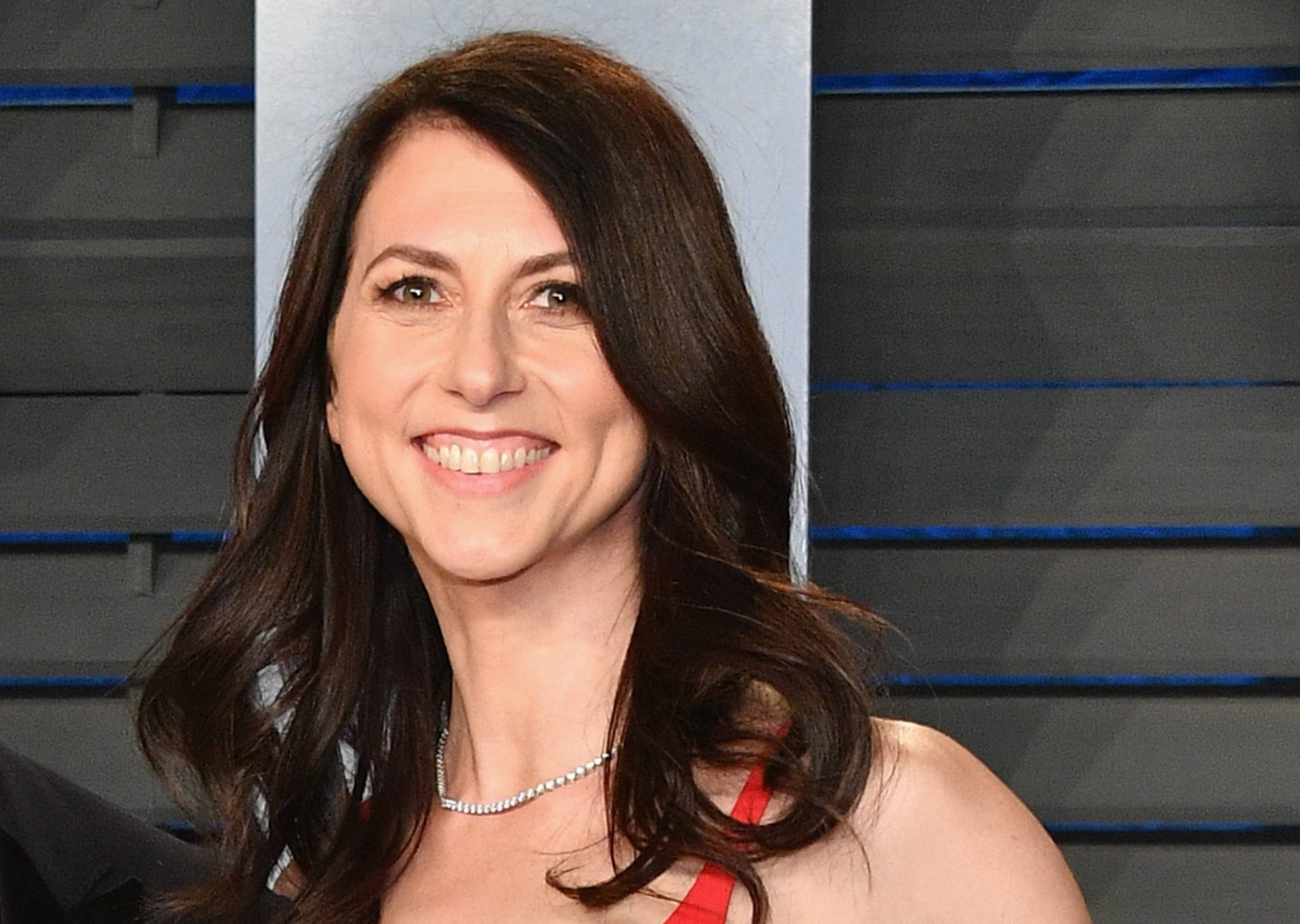
It’s official—we finally have a total figure for MacKenzie Scott’s donations this year: an eye-popping $7.2 billion. That brings the billionaire philanthropist’s total gifts since 2020 to $26 billion and more than 2,700 gifts. This squarely places Scott among the most generous philanthropists, alongside fellow billionaires Bill Gates, Melinda French Gates, and Warren Buffett—all of whom announced major giving plans this year.
“This dollar total will likely be reported in the news, but any dollar amount is a vanishingly tiny fraction of the personal expressions of care being shared into communities this year,” Scott wrote in an essay published Tuesday. “To use just one year in the United States as an example, the total donated to US charities of all kinds in 2020 was $471 billion, nearly a third of it in increments of less than $5,000.”
This year, the philanthropist, novelist, and ex-wife of Amazon founder Jeff Bezos made donations to more than 180 organizations, many of which were focused on DEI, education, disaster recovery, and humanitarian causes.
Her largest disclosed donations this year, according to her organization Yield Giving, include:
- Blackfeet Community College: $80 million
- Projeto Saúde e Alegria: $80 million
- Filantropía Puerto Rico: $80 million
- Thurgood Marshall College Fund: $70 million
- HSF: $70 million
- UNCF (United Negro College Fund): $70 million
- Prairie View A&M University: $63 million
- North Carolina Agricultural and Technical State University: $63 million
- California State University, Northridge: $63 million
- Morgan State University; $63 million
- Howard University: $63 million
Scott’s giving style
Many of these gifts were the largest single donations ever received by the respective organizations. And many have gone to organizations working on issues that have experienced major cuts from the Trump administration—namely a $60 million donation to the Center for Disaster Philanthropy this fall. The gift came after the Trump administration’s cuts to the Federal Emergency Management Agency (FEMA)—an organization Americans rely on for help during and after hurricanes, wildfires, tornadoes, and floods.
“All sectors of society—public, private, and social—share responsibility for helping communities thrive after a disaster,” CDP president and CEO Patricia McIlreavy told Fortune. “Philanthropy plays a critical role in providing communities with resources to rebuild stronger, but it cannot—and should not—replace government and its essential responsibilities.”
But what makes Scott’s philanthropic efforts so impactful is her giving style. Scott makes unrestricted gifts, meaning the organizations can use the donations however they choose to do so.
“She practices trust-based philanthropy,” Anne Marie Dougherty, CEO of the Bob Woodruff Foundation, told Fortune.
The veterans-focused Bob Woodruff Foundation has received two gifts from Scott: a $15 million gift in 2022, and a subsequent $20 million donation this fall. The $15 million gift was the largest in history at the time for the organization, which is almost two decades old now—founded the same year military reporter Bob Woodruff was severely injured by a roadside bomb in Iraq. It was cofounded by Woodruff and his family to provide support for injured service members, veterans, and their families.
Noni Ramos, CEO of Housing Trust Silicon Valley, also previously toldFortune that Scott’s donations are “unlike traditional funding processes,” which typically involve lengthy applications, specific restrictions, and reporting requirements.
“Her style empowers organizations like ours to determine how best to direct funds quickly and innovatively to address pressing issues,” Ramos said. Her organization received a $30 million donation from Scott in 2024.
In fact, some say Scott’s philanthropic style is so transformative it could change giving for years to come.
“At a moment when philanthropy is deciding its role in shaping our future, [her gifts point] to a path forward in the second half of this defining decade,” Melanie Allen, co-director of Hive Fund, said in a statement. The climate- and gender-justice-focused Hive Fund received part of a $140 million gift to climate-focused organizations, also including Equity Fund and The Solutions project.
“As federal climate commitments are rolled back and public funding becomes increasingly uncertain, frontline climate leaders are met with growing challenges but with fewer resources to enact innovative, locally responsive solutions,” Gloria Walton, CEO of The Solutions Project, added. “I hope this is just the beginning of an urgently-needed infusion of investment.”
Why Scott donates so much money
Although Scott had a career writing novels before her marriage to Bezos, the vast majority of her wealth came as the result of her 2019 divorce from the world’s fifth-richest man. During their marriage, Scott played a key role in Amazon’s founding and early operations, including helping with business plans and contracts. She received roughly a 4% stake in Amazon upon their divorce—a cut equivalent to roughly 139 million shares at the time.
She’s since reduced her Amazon stake by about 42% by selling or donating about 58 million shares. Still, Scott is worth about $40 billion today despite having donated more than $27 billion to charitable organizations through her foundation Yield Giving, which she founded in 2022.
Her proclivity for giving began in college when she witnessed two major acts of generosity: Her dentist offered her free dental work when he saw her securing a broken tooth with denture glue, and her college roommate who loaned her $1,000 when she saw her crying about nearly having to drop out during her sophomore year.
“It is these ripple effects that make imagining the power of any of our own acts of kindness impossible,” Scott wrote in the Dec. 9 essay. “The potential of peaceful, non-transactional contribution has long been underestimated, often on the basis that it is not financially self-sustaining, or that some of its benefits are hard to track. But what if these imagined liabilities are actually assets?”
What’s more, Scott also says giving just feels good.
“Generosity and kindness engage the same pleasure centers in the brain as sex, food, and receiving gifts, and they improve our health and long-term happiness as well,” she said.